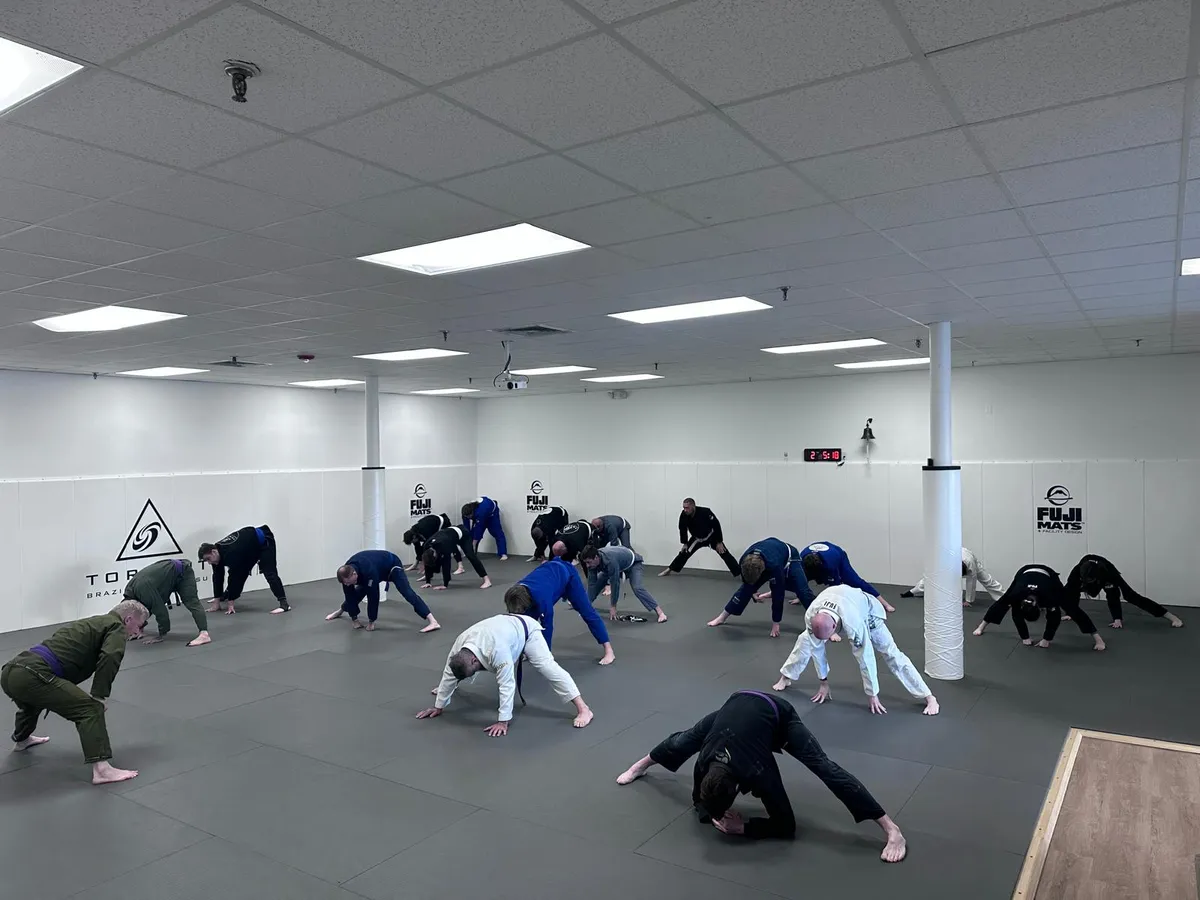
BJJ Terminology 101: A Beginner's Glossary of Key Terms
Walking into your first Brazilian Jiu-Jitsu class can feel a little intimidating.
You might hear someone say “shrimp,” “guard,” “mount,” or “tap” and wonder if everyone else received a handbook you somehow missed.
Don't worry. You don't need to know BJJ terminology before you start training. Most terms become easy to understand once you see the techniques in action.
Whether you're considering BJJ for yourself or looking into Kids BJJ for your child, this beginner's glossary will help you understand some of the most common terms you'll hear on the mats.
Common BJJ Terms Every Beginner Should Know
Guard
Guard is a group of positions where one person uses their legs to control their training partner, usually from underneath.
You may eventually hear terms like closed guard, open guard, and half guard. Don't worry about memorizing them all at once. Your instructor will teach you each position as you progress.
Mount
The mount is a dominant position where one person is positioned on top of their partner's torso.
It's one of the fundamental positions in Brazilian Jiu-Jitsu and an important position for both offense and defense.
Side Control
Side control is a top position where one person controls their partner from the side rather than sitting directly on top.
Beginners learn how to maintain side control, escape from it, and transition to other positions.
Back Control
Back control means controlling your partner from behind. It's considered an important position because it provides opportunities for both control and submissions.
Takedown
A takedown is a technique used to bring an opponent from standing to the ground while maintaining control.
BJJ includes takedowns, and many schools also incorporate techniques from wrestling or judo.
Sweep
A sweep allows the person underneath to reverse the position and end up on top.
For example, you might use a sweep while playing guard to turn a defensive position into a top position.
Submission
A submission is a controlled technique that applies pressure to a joint or uses a choke, causing a training partner to signal that they want to stop.
Tap
One of the most important BJJ terms for beginners is tap.
Tapping is a signal that you want your partner to stop. You can tap your partner, tap the mat, or verbally say “tap.”
Tapping is a normal part of BJJ training. It helps keep training controlled and allows both partners to practice safely.
What Does “Rolling” Mean in BJJ?
If someone asks, “Want to roll?”, they're usually asking if you'd like to do live practice.
Rolling is a common term for sparring with a resisting training partner.
For beginners, rolling isn't about going as hard as possible. Good training partners adjust their intensity so both people can learn and practice.
If you're nervous about rolling, that's completely normal. Your instructor can explain what to expect and help you ease into it.
What Is a BJJ Gi?
A gi is the traditional uniform worn for Brazilian Jiu-Jitsu. It consists of a jacket and pants and allows students to practice techniques using grips on the clothing.
What Is No-Gi BJJ?
No-Gi BJJ is practiced without the traditional gi. Students typically wear athletic clothing designed for grappling.
Without clothing grips, some techniques and strategies are different, but both Gi and No-Gi involve core BJJ skills such as positioning, escapes, takedowns, and submissions.
What Does “Shrimping” Mean?
Despite the funny name, shrimping has nothing to do with seafood.
It's a basic movement where you use your hips and legs to create space and move your body away from your partner.
It's one of the fundamental movements beginners practice because creating space is important for many defensive techniques and escapes.
What Are BJJ Belts?
Brazilian Jiu-Jitsu uses a belt ranking system to recognize a student's development and experience.
For adults, the commonly recognized progression is:
White → Blue → Purple → Brown → Black
Children's belt systems can vary by organization and program.
As a beginner, don't worry about your next belt. Focus on learning the fundamentals, showing up consistently, and enjoying the process.
Do You Need to Know BJJ Terms Before Your First Class?
Not at all.
It's normal to feel nervous when you're new. You may not know anyone at the gym, feel out of shape, or wonder whether you're going to understand what's happening.
That's part of being a beginner.
Your job isn't to know everything before you walk through the door. Listen to your instructor, ask questions, and give yourself time to learn.
The same applies when you're bringing your child to Kids BJJ. Children don't need to arrive knowing martial arts terminology. They learn the vocabulary along with the movements and skills.
Looking for BJJ in Hanover, MA?
If you're searching for Brazilian Jiu-Jitsu in Hanover, MA, learning the terminology is a great first step, but you don't have to figure everything out before trying a class.
At Torrent Brazilian Jiu-Jitsu, training includes BJJ, No-Gi, Judo, Boxing, and self-defense for people interested in learning martial arts and developing practical skills.
Whether you're completely new to martial arts or simply curious about BJJ, a free trial class is a chance to experience the training firsthand and see if it's a good fit for you or your child.
Interested in getting started? Visit Torrent BJJ to learn more or book a free trial class.